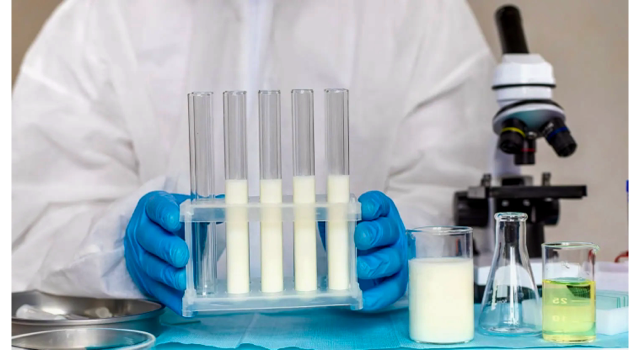
An Israeli Company Is Developing Milk Using Animal Cells. Wilk Technologies, formerly BioMilk, is an…

Aspirin Can Help Prevent Cancer.
A daily dose of aspirin can help prevent cancer and even stop existing tumours spreading, a major study has found.
The findings reveal compelling evidence that the painkiller can improve the odds of surviving the disease by up to 20%.
Professor Peter Elwood, of the Cardiff University Medical School, led a systematic review of more than 50,000 cancer patients across almost 50 studies going back decades.
He said, “Our review, based on available evidence, suggests low-dose aspirin taken by patients with bowel, breast or prostate cancer, in addition to other treatments, is associated with a reduction in deaths of about 15% to 20%, together with a reduction in the spread of the cancer.”
( Andrew Gregory, 21.04.2016 )
New Treatment For Kidney Stones.
A citrus fruit extract has been found to dissolve kidney stones, leading to hopes of new treatments.
Tests on hydroxycitrate, known as HCA, showed very promising results.
Images recorded the calcium oxalate crystals which form kidney stones actually shrinking when exposed to HCA.
Dr Jeffrey Rimmer, of the University of Houston in Texas, said: “HCA shows promise as a potential therapy.”
( Daily Mirror, 09.08.2016 )
Sense Of Touch Skin For Prosthetic Limbs.
Pioneering British scientists are developing electronic skin which could give amputees prosthetic limbs the sense of touch.
Researchers claim the new technology, which may be available in five years time, will also bring major changes to manufacturing and communications.
The skin would even allow an object to be felt by someone who is physically miles away – similar to the technology in blockbuster sic-fi film Avatar.
Dr Ravinder Dahiya, of Glasgow University, said that as well as the potential to modify prosthetic hands with the skin, there were other possibilities for medicine.
A key component of the skin is graphene, the world’s thinnest material.
It is only one millionth of the thickness of a human hair, but 200 times stronger than steel and conducts heat and electricity better than copper.
The team managed to find a low-cost way of developing sheets of the material.
They also use nanowire technology, extremely thin wires used to make sensors.
( Pamela Paterson, 23.05.2016 )
More People In The UK Not Eating Meat.
Half a million people in the UK are now on a vegan diet, the total has more than trebled in ten years.
A survey by the Vegan Society and Vegan Life magazine found 42% of those avoiding meat, fish and dairy were aged 15-34.
Only 14% were over 65.
There are also 1.7 million vegetarians.
( Daily Mirror, 18.05.2016 )
Alcohol And Processed Meat Cause Stomach Cancer.
Beers, bacon and obesity have been linked for the first time to stomach cancer.
There is strong evidence that drinking three or more alcoholic drinks a day, eating processed meat and being overweight increased the risk, a World Cancer Research Fund report has found.
Dr Rachel Thompson, from the Fund, said: “These findings give us a clearer picture. Hopefully they will help people make informed decisions about their lifestyles choices”.
The disease kills 5,000 people a year in the UK.
( Andrew Gregory, 21.04.2016 )
Appalling Treatment Of Dying Folk In NHS Hospitals.
One in eight dying patients are starved of food and water in their final days of NHS care.
And one in ten die in agony without pain relief, a poll of bereaved relatives found.
A third of those polled said their hospital did not work well together with GP and other community care services.
One in ten rated the overall end-of-life care as ‘poor’.
The most deprived areas got the worst services, the Office for National Statistics survey found.
( Jack Blanchard, 23.04.2016 )
Aspirin Cuts Risk Of Stroke.
Taking an aspirin daily straight after suffering a mini-stroke can slash the risk of a major one by up to 80%, a study suggests.
Over-60s are at highest risk of mini-strokes, or transient ischemic attacks.
And one in 20 people hit by them have a major attack within two days, rising to one in 12 within a week.
Professor Peter Rothwell of Oxford University said: “Our findings confirm the effectiveness of urgent treatment and show aspirin is the most important component.”
( Daily Mirror, 19.05.2016 )
Foster Children Suffer From Government Cuts.
Children in care are finding it harder to access ongoing support from social workers because of Government budget cuts, foster carers have warned.
A survey by The Fostering Network of more than 760 carers across the UK revealed more than two-thirds felt cuts had impacted foster children’s’ access to social workers.
Three in five carers also felt support from their supervising social worker had been affected.
( Community Care, April 2016 )
A Wonder Drug For Asthma.
A ‘wonder drug’ that dramatically reduces the severity of asthma attacks has been developed by British scientists.
The pill, which is taken twice daily, has been hailed a real ‘game changer’, with the potential to revolutionise treatment of the disease, which affects 5.4 million Britons.
Within three months, asthma became five times less severe in participants taking the medication.
Professor Chris Brightling, of the University of Leicester, said, “This new drug could be a game changer for treatment of asthma”.
Fevipiprant is aimed at severe sufferers and is currently being evaluated in clinical trials.
Three people die every day because of asthma attacks and research shows that two thirds of these deaths are preventable, according to Asthma UK.
The study took place at Glenfield Hospital in Leicester.
( Mark Waghorn, 06.08.2016 )
Related Posts


Comments (0)