Pharmaceutical Company Profit From And Defend The Meat Industry.
For years, Jeff Simmons — the president and CEO of the large U.S. pharmaceutical company Elanco — ridiculed a seemingly unlikely target on social media: the plant-based meat industry.
As startups like Beyond Meat and Impossible Foods rose to prominence, Simmons attacked veggie burgers and meat-free chicken as highly processed foods that “won’t do” in the effort to feed a growing population –– Even though experts widely acknowledge that plant-based meat would, in fact, better help feed a growing population, as it requires less land and water and generates far less greenhouse gas emissions than animal meat.
But take a closer look at Elanco, and Simmons’s opposition isn’t all that surprising.
The company he runs, which spun off from pharmaceutical giant Eli Lilly in 2019, is a world leader in developing and marketing pharmaceuticals — including antibiotics and vaccines — for both pets and livestock.
In the U.S., nearly all meat, milk, and eggs come from factory farms, which are prone to being overcrowded, stressful, disease-ridden environments where animals are especially susceptible to infections.
Products from companies like Elanco are integral to preventing and treating those inevitable infections, serving an essential role in industrial animal agriculture.
If plant-based meat were ever to displace some of the conventional meat supply, it would mean fewer factory-farmed animals, and thus less profit for Elanco.
In a 2019 financial report, the company wrote: “Alternatives to animal-derived protein could negatively affect the market for our products.”
The company’s work can be thought of as part of the “animal-industrial complex” — a network of companies, governments, and public and private research centres that, according to sociologist Richard Twine at Edge Hill University in the UK, make up the factory farm system, promote its continued existence and expansion, and defend it from criticism.
( Kenny Torrella, 01.03.2025 ) .. vox.com
Dead Dolphins And Seals Wash Up On Santa Monica Beach.
Residents in Los Angeles continue to witness the devastating impact of the deadly wildfires, with marine life now emerging as the latest casualty of the disaster.
The fallout from the destructive blaze has reached the city’s coastline where a deadly tide of toxic fire debris has resulted in dead dolphins and seals washing up along the iconic Santa Monica Beach.
The tragic scenes have sparked outrage from locals who are now accusing city, county, and state officials of failing to protect the coast from the environmental disaster.
( Supertrooper, 28.03.2025 ) .. focusingonwildlife.com
An Alarming Amount Of Microplastics Found In The Lungs Of Birds.
While previous research has revealed the presence of microplastics in human lungs, a new study confirms that microplastics are making their way into birds’ lungs as well.
The study, published in the Journal of Hazardous Materials, is the first to confirm microplastic presence in birds’ lungs.
The researchers focused on analysing potential microplastics in birds, as bird health can provide insights and warnings about potential impacts on the surrounding environment.
Lung samples were collected from 56 individual birds representing 51 different species.
They found microplastics present in all 51 species.
The results showed an average of 221.20 microplastic particles per species and 416.22 microplastic particles per gram of lung tissue, revealing an alarming amount of plastics in the birds’ lungs.
In the study, the scientists detected 32 different types of plastics, with the most common types being chlorinated polyethylene (CPE) and butadiene rubber (BR), a pollutant found in vehicle tyres.
The team concluded that their findings show that birds can be a bio-indicator of the level of airborne plastic particle pollution, which could affect other wildlife and humans.
( Paige Bennett, 03.03.2025 ) .. ecowatch.com
The Long-Term Ecological Ramifications Of Oil Spills Are Immeasurable.
The Deepwater Horizon oil spill of 2010 remains one of the most catastrophic environmental disasters in history, releasing over 4.1 million barrels of oil into the Gulf of Mexico.
Located just 50 miles off the coast of Louisiana, the spill had devastating effects on coastal ecosystems, impacting the shores of Louisiana, Mississippi, Alabama, and Florida.
The spill contaminated vital marshlands and habitats, which serve as critical sanctuaries for numerous species.
The impact on marine life became painfully clear in the months following the spill.
By July 2010, over 7,000 marine animals were reported dead or severely affected, with many showing visible signs of oil contamination or suffering from dispersant chemicals used during cleanup efforts.
This incident starkly highlighted the gross negligence of BP and the greater oil industry, contributing to an ongoing environmental crisis that will reverberate through generations.
The Exxon Valdez oil spill in 1989 claimed the lives of approximately 435,000 birds, while the Deepwater Horizon spill affected over 7,000 birds.
The true toll remains unknown, as many birds succumb to hidden effects of oil exposure.
The 2010 spill led to the deaths of an estimated 1.3 million fish, and caused significant declines in local dolphin populations, with researchers estimating that around 50% of the dolphins in the Gulf experienced health issues related to the spill.
The long-term ecological ramifications of oil spills are immeasurable.
( Supertrooper, 12.03.2025 ) .. focusingonwildlife.com
Investigation Uncovers A Large Black-Market Deer Breeding Operation.
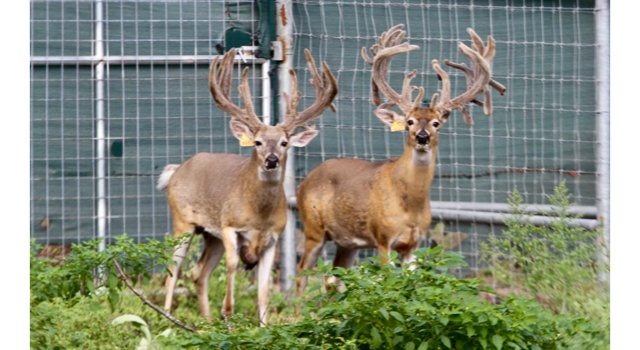
During a traffic stop outside Houston, Texas game wardens caught two deer breeders trying to move captive whitetails illegally across the state.
The men pleaded guilty, and they were convicted of more than 50 deer breeder violations for disobeying the state’s CWD rules and transporting unidentifiable “ghost deer,” which they planned to release “into the wild” on private property.
All seven of the deer were euthanised by game wardens, according to the Texas Parks and Wildlife Department.
But that was just the tip of the iceberg, according to a report issued by TPWD.
The report mentions a follow-up investigation that uncovered a much larger ring of 22 suspects, who were allegedly involved in a black-market deer breeding operation spanning 11 counties.
The suspects now face around 1,200 criminal charges, including hundreds of misdemeanours and multiple state jail felonies, for “circumventing requirements, disregarding regulations and falsifying official records,” according to TPWD.
Most of those records, requirements, and regulations are related to Chronic Wasting Disease, and the risk of disease transfer from captive deer to wild populations.
( Supertrooper, 03.03.2025 ) .. focusingonwildlife.com
Bird Flu Is Spreading To Non-Avian Species, Including Pigs, Cows, And Even People.
Avian influenza, also known as avian flu or bird flu, is nothing new.
It was first discovered in the late 1800s, and there have been a number of high-profile outbreaks since then.
In fact, a number of high-profile outbreaks happened in 2014.
But the most recent bird flu outbreak has proven much more resilient and deadly than those in the past.
It began in 2020, and while previous outbreaks have died off after a few months to a year, this current one is now in its fifth year and showing no signs of letting up.
It’s also been spreading to non-avian species, including pigs and cows, as well as people.
Backyard chickens and small farms are also far from immune from the virus.
As of 2022, the latest year for which data is available, there were a little over 168,000 farms in the U.S. that produced poultry products, in whole or in part.
Livestock chickens are generally divided into two categories –– broilers, who are raised and slaughtered for meat, and layers, who are raised to lay eggs.
At any given point, there are around 389 million layer hens at poultry farms across the U.S., and they produce about 109 billion eggs every year.
In the U.S. alone, farmers slaughter around 9.5 billion chickens every year, including both broilers and layers.
The current strain of avian flu is believed to have originated in wild birds, not animal farms.
But there are a number of things about animal farms, and chicken farms specifically, that make them especially susceptible to spreading the disease.
To begin with, the living conditions on poultry farms are almost tailor-made to facilitate the spread of disease.
This is especially the case when the chickens are confined in close spaces, as they are on factory farms, but it’s also just an intrinsic fact about chicken husbandry itself.
Chickens are highly social creatures who interact regularly with one another, and disease spreads rapidly through flocks even when the animals have a healthy amount of space.
That said, practices common to factory farms make the situation much worse, and not solely because the chickens in them are typically crammed together in tight spaces.
The poultry industry has selectively bred chickens in order to maximise egg output, but selective breeding leads to a low level of genetic diversity within flocks.
This, in turn, might make the flocks more susceptible to diseases, according to a 2008 study.
One reason this recent outbreak has worried epidemiologists so much is its ability to spread to non-bird species.
This aspect, too, is potentially related to chicken farms.
Dairy cows are sometimes fed “poultry litter” — a euphemistic name for the mixture of chicken manure, feed, feathers and other organic garbage from poultry farms — and it’s been speculated that this practice may be responsible for spreading the virus to dairy cows, who in turn have been spreading it to people, mostly farm workers.
( Seth Millstein, 17.03.2025 ) .. sentientmedia.org
Several Species Of Raptors, Including Hawks And Owls, Illegally Shot And Killed.
Eleven birds were found shot and killed between December 2024 and February 2025, the Utah Department of Natural Resources said.
Natural Resource officers determined all of the birds were killed with a firearm, and some “appeared to have been shot out of their roosts, while others were shot inside of barns,” officials said.
“Based on witness reports, it is believed that individuals are shooting raptors from their resting locations at nighttime, and those involved have even trespassed on private property and shot within close proximity to homes during these incidents,” Natural Resources officer Jeremy Butler said.
The birds were found in and around communities in Beaver County, about a 230-mile drive southwest from Salt Lake City.
Raptors are protected by state and federal laws and it’s illegal to kill them.
( Supertrooper, 05.03.2025 ) .. focusingonwildlife.com
Comments (0)