Zionism Is A Tool Of British Imperialism Which Needs Palestine For Its Own Purposes. This…
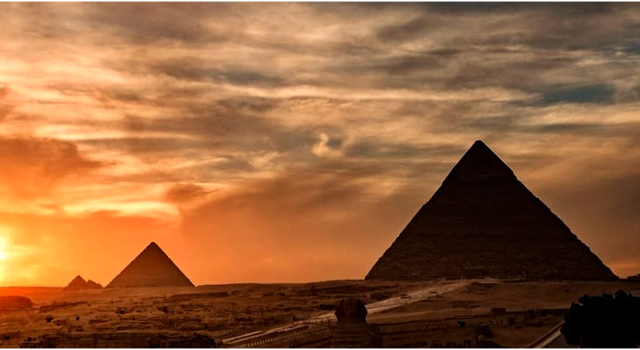
The Exodus Story.
The story of the Exodus is one of the most well-known narratives in the Bible.
It begins not with a nation, but with a single family, forced by hardship to leave their home, and eventually becoming a people seeking freedom.
Joseph and the Journey to Egypt.
The story begins with Joseph, one of the sons of Jacob (also called Israel).
After being sold into slavery by his brothers, Joseph rose to a position of great authority in Egypt.
During this time, a severe famine spread across the region of Canaan.
Because Joseph had wisely stored grain during earlier years of abundance, Egypt became a place of refuge.
As the famine worsened, Joseph’s family, around 70 people in total, travelled to Egypt for survival.
What about those left behind?
The Bible does not provide much detail, but it is likely that many in Canaan suffered greatly.
Some may have survived through trade or migration, while others may not have endured the prolonged famine.
Over time, the focus of the Bible story shifted entirely to Egypt.
Time in Egypt.
The people and their descendants remained in Egypt for several centuries, traditionally understood as around 400 to 430 years.
During this time:
They grew from a small family into a large population.
A new Pharaoh came to power who did not remember Joseph.
They were eventually enslaved and forced into hard labour.
The Twelve Tribes.
Jacob had twelve sons, and each became the ancestor of a tribe:
- Reuben
- Simeon
- Levi
- Judah
- Dan
- Naphtali
- Gad
- Asher
- Issachar
- Zebulun
- Joseph
- Benjamin
Over time, the tribe of Joseph was often divided into two through his sons (Ephraim and Manasseh), but the traditional number of tribes remained twelve.
These tribes formed the structure of society, each with its own identity and lineage.
Why Did They Leave Egypt?
They did not initially plan to leave Egypt.
Their departure came after generations of oppression.
According to the Bible:
They were enslaved under a powerful Pharaoh.
Their workload was harsh and unrelenting.
Their population growth was seen as a threat.
The Bible says that God raised up Moses to lead them out of Egypt.
After a series of dramatic events known as the Ten Plagues, Pharaoh finally allowed them to leave.
The Exodus Journey (c. 1300–1200 BC, debated).
They left Egypt in large numbers.
The Bible suggests:
Around 600,000 men, plus women and children.
This could mean a total population of 2 to 3 million people, depending on interpretation.
It’s reasonable to assume that during the 400 to 430 years between their arrival in Egypt and the mass exodus, the people and their descendants from Canaan had relationships and children with indigenous Egyptians.
Their journey took them into the wilderness, beginning what should have been a relatively short journey to Canaan.
However, the journey lasted 40 years.
How many did not survive?
A significant number did not complete the journey.
The Bible suggests that:
Most of the adult generation who left Egypt died in the wilderness.
Only a small number, including Joshua and Caleb, entered Canaan.
This was attributed to hardship, disobedience, and the harsh conditions of desert life.
Did This Really Happen?
This is a question that has been discussed for centuries.
In Jewish and Christian traditions, the Exodus is a foundational historical and spiritual event.
There is currently no history or archaeological evidence for a large-scale Exodus as described.
The Exodus may lie somewhere between history and tradition, combining real events with theological meaning.
Joseph in Egypt.
Long before the Exodus, Joseph found himself in Egypt, not by choice, but through betrayal.
Sold by his brothers, he rose from slavery to become a powerful official under Pharaoh.
Years passed.
Joseph spent around 13 years in hardship (slavery and prison), before rising to power at about age 30.
After this, 7 years of plenty followed, then 2 years of famine before his family arrived.
This means Joseph had likely been in Egypt for around 20–22 years before seeing his family again.
When famine spread across Canaan, his father, Jacob, brought the family, about 70 people, into Egypt.
Jacob’s family travelled from Canaan to Egypt, likely following established trade routes, passing through semi-arid and desert regions.
The journey may have taken several weeks to a couple of months, depending on pace and conditions.
It was not the dramatic wilderness wandering of the Exodus, but it was still a significant migration.
Why Is Jacob Called Israel?
The Bible says that one point in his life, Jacob had a mysterious encounter, wrestling through the night with a divine being.
After this, he was given a new name, Israel, meaning roughly “one who struggles with God” or “God prevails”.
From that moment his descendants became known as the children of Israel.
From Guests to Slaves (c. 1700–1300 BC, approximate).
For generations, the people from Canaan, and their descendants, lived in Egypt.
At first, they were welcomed.
But over time, a new Pharaoh arose who did not remember Joseph, they had grown numerous, they were seen as a potential threat, and they were enslaved and forced into labour.
The Ten Plagues of Egypt.
When Moses, who was born in Egypt, confronted Pharaoh, he demanded freedom for the people and their descendants from Canaan.
Pharaoh refused.
What followed were the Ten Plagues, a series of escalating events:
- Water turned to blood
- Frogs covered the land
- Gnats or lice
- Flies
- Livestock disease
- Boils
- Hailstorm
- Locusts
- Darkness
- Death of the firstborn
The final plague led to the first Passover, after which Pharaoh finally let them go.
Was Moses A Real Person? .. Related article: was moses a real person
A Simple Timeline.
Here is a rough, widely accepted biblical timeline (with debated dates):
- c. 1900–1700 BC — Time of Abraham, Isaac, Jacob.
- c. 1700 BC — Jacob’s family enters Egypt.
- c. 1700–1300 BC — The family grow in Egypt.
- c. 1300–1200 BC — The Exodus under Moses.
- 40 years later — Arrived back in Canaan.
Bringing It All Together
A young man is sold into slavery.
A family moves to survive famine.
A people grow, are oppressed, and cry out.
A reluctant leader rises.
A nation walks into the wilderness in search of freedom.
Who Was Living in Canaan?
When they returned from Egypt, the land of Canaan was already inhabited.
The Bible names several groups, including:
- Canaanites
- Amorites
- Hittites
- Jebusites
- Perizzites
These were distinct peoples, with their own cities, kings, and cultures.
How Did the People of Canaan React?
According to the Bible (especially the Book of Joshua), the reaction was largely fear and resistance.
Some in Canaan believed this was a people protected by a powerful God.
The biblical narrative describes a series of conflicts as the people from Egypt entered and settled in the land.
Not everyone resisted.
Some groups made an effort to be peaceful with the new arrivals.
Were They “Returning Home”?
This depends on perspective.
They would have appeared as a new incoming group, not long-term residents.
More like migrants entering an already populated land.
Generations earlier: a small family lived in Canaan.
They moved to Egypt during famine.
Centuries later: their descendants return as a large people.
But the land is now full of other nations.
So their arrival created tension between an existing population.
Reactions included fear, conflict, and occasional cooperation.
Over time, the populations mixed culturally and socially.
How Do Historians Interpret All This Today?
This is where things get especially interesting.
There isn’t one single agreed view, there are a few main interpretations:
The Traditional View (Biblical Narrative):
A large group left Egypt.
Conquered Canaan under Joshua.
Replaced or displaced the existing populations.
This aligns closely with a straightforward reading of the Bible.
The Gradual Infiltration Model:
Some historians suggest:
Those returning from Egypt entered Canaan gradually over time.
Likely as small groups or tribes.
Settling mostly in less populated hill regions.
There may have been occasional conflicts, but not a single large-scale conquest.
Some scholars combine ideas:
There may have been a small Exodus group from Egypt.
This group joined people already living in Canaan.
The Bible tells a story of arrival and conquest.
Archaeology suggests a more gradual and complex transition.
The likely reality may include: Migration, cultural blending, and evolving identity.
Over time, they were absorbed or merged into one society.
When Did Judaism Emerge?
There isn’t a single starting date, because it developed gradually over time.
After the Exodus and settlement in Canaan:
The people followed God (Yahweh).
Worship centred on: Sacrifices, Priests (especially from the tribe of Levi), and the Tabernacle, and later the Temple in Jerusalem.
At this stage it wasn’t called “Judaism”, it was usually referred to as “Israelite religion”.
The Babylonian Exile (c. 586 BC).
The Temple in Jerusalem was destroyed.
During and after this period religious practices began to change.
Greater emphasis was placed on written texts (early Hebrew scriptures), prayer instead of sacrifice, and observing the Law (Torah).
This is when something much closer to Judaism as we know it begins to take shape.
The word “Judaism” comes from:
“Judah” (one of the 12 tribes, and later the southern kingdom).
In Hebrew: Yehudah (יְהוּדָה).
People from there were called Yehudi (יְהוּדִי) → meaning “Judean”.
The religion was essentially the practices and beliefs of the people of Judah.
There was no letter “J” in ancient Hebrew, Greek, or Latin.
So: In Hebrew, it wasn’t called “Judaism”.
People would have thought of it as: “The way (or law) of Yahweh”.
Or “The Torah” (teaching/instruction).
Later, in Greek (a few centuries BC), we begin to see: “Ioudaismos” (Ἰουδαϊσμός) → meaning “the Judean way of life”.
That’s where our English word Judaism eventually comes from.
The name comes from Judah → Judean → Judaism.
Final Thoughts.
The story of the Exodus is a prime example of the collision between religious tradition and scholarly analysis.
Are there any historical or archaeological evidence for the events described in Exodus?
The simple answer is “No”.
The story of the Exodus as presented in the Bible includes several miraculous events, such as the 10 plagues, the mass departure from Egypt, and the parting of the Red Sea.
Despite the story’s importance in the biblical tradition, modern archaeological and historical scholarship has found no reliable evidence to support these events as described.
Extensive excavations in Egypt, particularly in the regions associated with the biblical narrative, have failed to uncover any evidence of a large-scale presence or exodus.
Egyptian records, normally detailed about every event and happening, make no mention of the arrival, the slaves, the devastating plagues, or the mass exodus.
Related Posts


Comments (0)