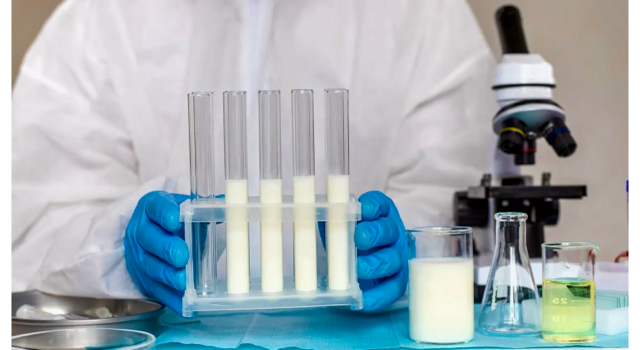
An Israeli Company Is Developing Milk Using Animal Cells. Wilk Technologies, formerly BioMilk, is an…

NHS Contracts Given To Private Firms Owned By People Living In Tax Havens.
Private firms providing services to the NHS including healthcare and consultancy have made £1.6billion in profits over the last two years, research reveals.
The findings, on the basis of contracts worth £12billion, have prompted claims of “scandalous” profiteering, concern that the health service is being “taken for a ride” and calls for ministers to impose a cap on maximum profit levels.
The £1.6billion in profits made in 2023-24 and 2024-25 would have been enough to pay for 9,178 doctors or 19,428 nurses during that time, according to the Centre for Health and the Public Interest.
Its findings are based on analysis of NHS contracts in England, with 760 private firms providing services including diagnostic tests such as CT scans to patients, and treatments including hip and knee replacements, and for skin problems and mental health conditions.
£2billion of the £12billion of contracts went to firms with owners based outside the UK.
£533million of that £2billion went to companies owned by people living in tax havens such as Jersey and the Cayman Islands.
Firms, especially those owned by private equity outfits, used £353million of their £12billion NHS income to pay interest on debts.
( Denis Campbell, 13.04.2026 ) .. theguardian.com
More Medically Important Antibiotics Are Sold For Use In Farm Animals Than For Humans Each Year.
A rising number of antibiotic drugs that are essential for human health are now being sold for use in farm animals.
The upward trend in sales is raising concerns among public health experts who say that overuse in animals is helping to drive up antibiotic-resistant infections in people.
Antibiotic resistance, where bacteria are not effectively treated by antibiotics, leads to almost 3 million infections and 35,000 deaths a year in the United States alone.
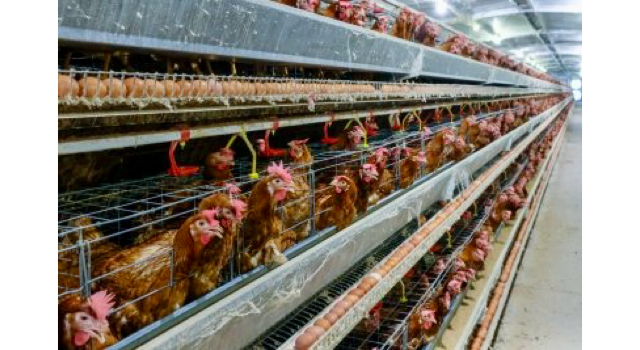
More medically important antibiotics are sold for use in farm animals than for humans each year.
They are used to treat sick animals and are given to healthy animals to prevent disease.
Diseases can spread quickly between animals in intensive farming systems, which can be crowded and where hygiene and welfare can be poor.
It is unclear what is driving the rise in sales, but it is not due to farmers raising more animals.
Fewer cattle and turkey were raised in 2024 compared to 2023, and the number of pigs and chickens increased by less than 1%.
The new FDA data shows that sales between 2023 and 2024 rose by roughly 16%.
Sales for antibiotics in chickens grew the most across all animals, rising by 79% in 2024.
The rise in sales suggests that the FDA’s plans to curb antibiotic use in farm animals are failing.
Since 2017, the FDA has banned the use of medically important antibiotics to boost animal growth.
Today, farmers can only use antibiotics for preventing or treating disease.
The FDA now requires veterinarians to issue prescriptions for these drugs.
( Natasha Gilbert, 02.02.2026 ) .. sentientmedia.org
There Is Very Little Evidence That Medicinal Cannabis Helps Tackle Mental Health Conditions.
Cannabis is not an effective treatment for common mental health conditions despite the global surge in patients using it for that purpose, a review has found.
Researchers concluded there was “very little evidence for its efficacy” in treating anxiety, anorexia nervosa, psychotic disorders, post-traumatic stress disorder or opioid use disorder.
Experts from universities in Sydney, Brisbane and Melbourne in Australia and Bath in England undertook the largest and most comprehensive analysis to date of the evidence for using cannabinoids, cannabis-based therapies, to treat substance misuse and mental health disorders.
Their review was prompted by the legalisation of cannabis as a treatment for both types of condition by countries including the U.S., the UK, Australia and Canada.
( Denis Campbell, 16.03.2026 ) .. theguardian.com
A High Intake Of Red Meat Is Linked To A Significantly Higher Risk Of Type 2 Diabetes.
Eating a lot of red meat, especially processed varieties, may increase the risk of developing diabetes by almost half, according to a new large U.S. study.
Using data from over 34,000 adults in the NHANES 2003-2016 survey, this study found that a higher intake of red meat, especially processed meat, was linked to a significantly higher risk of type 2 diabetes.
Participants in the top fifth of red meat consumption had a 49% higher risk of diabetes compared with those eating the least.
Replacing one daily serving of red meat with plant-based protein sources such as pulses, nuts, seeds or soya was associated with a 9% to 14% lower risk.
These findings, reported in the British Journal of Nutrition, reinforce existing evidence that limiting red meat and choosing plant proteins may help reduce diabetes risk.
( Dr. Justine Butler, 17.03.2026 ) .. viva.org
A Daily Multi-Vitamin May Slow Biological Ageing.
Taking a multi-vitamin every day for two years appears to slow some markers of biological ageing to a small degree.
While chronological age is based on how long a person has lived, biological age reflects the state of the body.
Estimates of the latter are often based on changes in patterns of DNA methylation, modifications to DNA that accumulate with age and affect how genes function.
One theory is that by slowing the rate of biological ageing, it may be possible to prevent or mitigate age-related illness, meaning people have more years of good health.
A study carried out by researchers in the U.S. and including funding from the confectionery manufacturer Mars, suggests a daily multi-vitamin could help slow some markers of biological ageing, although what that means in terms of health remains unclear.
( Nicola Davis, 09.03.2026 ) .. theguardian.com
Living Near An Animal Factory Farm May Increase Your Risk Of Cancer.
People living near higher densities of factory farms may face increased cancer risk, a new study finds.
While the public health and environmental impacts of concentrated animal feeding operations, or CAFOs, are well documented, the investigation is among the first to examine links to cancer across multiple U.S. regions and cancer types.
CAFOs are animal feeding operations that meet a certain size threshold, such as at least 700 dairy cattle, 2,500 swine or 100,000 laying hens.
Researchers at Yale University analysed county-level cancer rates from 2000 to 2021 in Iowa, Texas and California, comparing areas with high concentrations of factory farms to similar counties with few.
They found that overall cancer incidence rates were “significantly elevated” in counties with more animal feeding operations.
Factory farms produce massive amounts of manure.
Iowa’s hogs alone produce an estimated 110 billion pounds of manure each year, at least 100 times the amount of fecal waste created by Iowa’s entire human population.
Nearly all of the hogs in Iowa are raised in CAFOs.
Typically stored in large outdoor ponds called lagoons, CAFO manure generates harmful amounts of air pollutants, including ammonia, hydrogen sulfide and particulate matter, and contaminated run-off leads to pathogens and nitrates leaching into local waterways.
A recent report from the Iowa Environmental Council and the Harkin Institute found that high levels of environmental contaminants, including nitrates, are linked to cancer risk and are ubiquitous across Iowa.
The state has the second-highest and fastest-rising cancer rate in the United States.
( Emily Payne, 14.04.2026 ) .. sentientmedia.org
Deaths Linked To Antibiotic-Resistant Infections Are Rising Worldwide.
Genes capable of creating antibiotic-resistant superbugs have been detected in the UK’s largest lake, which supplies drinking water to about 40% of Northern Ireland.
Testing of water from Lough Neagh, which has a surface area 26 times bigger than Windermere, found genes resistant to a wide range of antibiotics, including carbapenems, drugs reserved for life-threatening infections when all other treatments have failed.
The discovery comes as deaths linked to antibiotic-resistant infections are rising worldwide.
Nearly 400 resistant infections are reported each week in England, with deaths linked to them reaching an estimated 2,379 in 2024, according to UK Health Security Agency data.
The World Health Organisation (WHO) describes this antimicrobial resistance (AMR) as “one of the most urgent, complex and frightening health challenges of our time”.
Alongside the resistance genes, markers of human, cattle and pig faeces were detected in the water.
Sewage and farm animal slurry create ideal conditions for superbugs, flushing pathogens, antibiotic residues and resistant bacteria into waterways where they can mix, multiply and spread.
Sewage and slurry pollution is widespread across the UK.
In Lough Neagh it has fuelled vast toxic algal blooms, visible from space, that suffocate wildlife and help spread antibiotic resistance.
Despite various environmental protections, the lake is now in such poor health that campaigners recently held a mock funeral for it.
( Rachel Salvidge, 14.03.2026 ) .. theguardian.com
The Sharp Decline In Britain’s Healthy Life Expectancy.
People in the UK are spending fewer years in good health than a decade ago, prompting concern that the population’s health is “going backwards”.
The sharp decline in Britain’s healthy life expectancy, the amount of time someone spends free of illness or disability, is in sharp contrast to its recent rise in most other rich countries globally.
The UK population’s health is poor, getting worse and not undergoing the same steady improvement seen in countries such as Japan, Norway and Spain, according to a new analysis of healthy life expectancy in 21 countries by the Health Foundation think-tank.
It went up by an average of four-tenths of a year across the 20 other comparable countries.
Healthy life expectancy for men in the UK has fallen from 62.9 years in the 2012-14 period to 60.7 years in 2022-24 and from 63.7 to 60.9 years for women over the same timeframe, it found.
It means that the proportion of life a man spends in good health is down from 79% to 77% and, for a woman, from 77% to 73%, the analysis by the Office for National Statistics showed.
The decline in Britons’ health in recent years is so significant that, in more than 90% of the UK, people now start suffering from illness before the state pension age of 66, the study revealed.
The report found that the UK was one of only five countries where healthy life expectancy has declined, and it had fallen from 14th to 20th in the 21-nation international league table, with only the U.S. below it.
The findings help explain why a record 2.8 million people are too sick to work, deaths are rising among 25 to 49-year-olds and growing numbers of 16 to 24-year-olds are not in education, employment or training because they have a physical or mental health condition.
The UK has deep and widening inequalities in healthy life expectancy.
It is highest in wealthy Richmond upon Thames, London, where the average man enjoys 69.3 years and average woman 70.3 years in good health.
However, in contrast, an average man in Blackpool gets just 50.9 years and the average woman in Hartlepool only 51.2 years.
( Denis Campbell, 27.04.2026 ) .. theguardian.com
Related Posts

Comments (0)