Zionism Is A Tool Of British Imperialism Which Needs Palestine For Its Own Purposes. This…
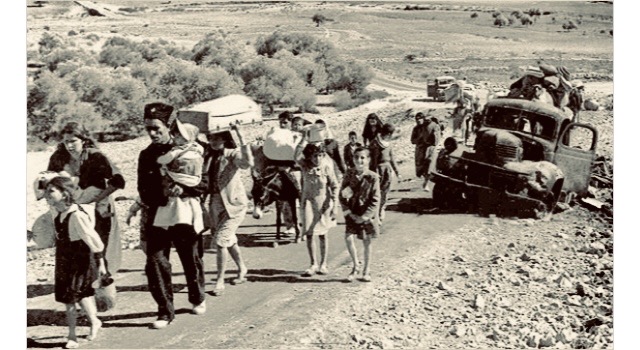
Apartheid, The Stealing Of Land, The Theft And The Destruction Of Homes And Property, Ethnic-Cleansing, And The Forced Displacement Of Millions.
Today, about six million Israelis live on 85% of the area that was Palestine under the British mandate.
Nearly 3.5 million Palestinians are confined to the remaining 15%, with their towns and cities penned between Israel’s ever-expanding settlement blocks and behind a network of segregated roads, security barriers and military installations.
The world of 1948 into which the Jewish state was born and the Afrikaners came to power cared little about the “dark peoples” who stood in the way of grand visions.
Neither government was doing very much that others, including British colonists, had not done before them.
And if Israel was fighting for its life and forcing Arabs out of their homes at the same time, who in the West was going to judge the Jews after what they had endured?
While Tony Blair was praising the Israeli prime minister for his political “courage” in leaving Gaza in August 2005, Sharon was expropriating more land in the West Bank than Israel surrendered in Gaza, building thousands of new homes in Jewish settlements, and accelerating construction of the 400-plus miles of concrete and barbed wire barrier that few doubt is intended as a border.
Take the roads. Israel is rapidly constructing a parallel network of roads in the West Bank for Palestinians who are barred from using many existing routes.
B’Tselem, the Israeli human rights group, describes the system as bearing “clear similarities to the racist apartheid regime that existed in South Africa”.
The army, which describes roads from which Palestinians are forbidden as “sterile”, says the policy is driven solely by security considerations.
But it is evident that the West Bank road system is a tool, along with the 400-plus miles of barrier, in entrenching the settlement blocks and carving up territory.
With Sharon out of politics, his successor Ehud Olmert has pledged himself to carrying through the vision of carving out Israel’s final borders deep inside the West Bank and retaining all of Jerusalem for the Jewish state.
So Is It Apartheid?
Stepping into modern Israel, anyone who experienced the old South Africa would see few immediately visible comparisons.
There are no signs segregating Jews and non-Jews.
Yet, as in white South Africa then and now, there is a world of discrimination and oppression that most Israelis choose not to see.
Israeli soldiers routinely humiliate and harass Palestinians at checkpoints and settlers paint hate-filled slogans on the walls of Arab houses in Hebron.
The police stop citizens who appear to be Arabs on West Jerusalem streets to demand their identity cards as a matter of routine.
Some Jewish communities refuse to allow Arabs in their midst on the grounds of cultural differences.
One Jewish settlement mayor tried to require Arabs who entered to wear a tag that identified them as Palestinians.
In the 1990s, right-wingers menaced shopkeepers into sacking Arab workers.
Those who complied were given signs declaring their shops Arab-free.
Sometimes the hatred is explained away as religious discrimination, but the chants at the football matches go “Death to Arabs” not “Death to Muslims”.
The Israeli press largely ignores the routine of occupation despite the fearless reporting of some journalists on the disturbing number of children who die under Israeli guns (more than 650 since the second intifada broke out in September 2000, of which a quarter were younger than 12 years old); the abuse of Palestinians by settlers, and the humiliations meted out at the checkpoints.
The eight-metre-high wall driven through Jerusalem is almost invisible to residents of the Jewish west of the city.
Because of the geography, most of the city’s Jews do not see the concrete mammoth dividing streets and families, and the demolished homes, just as most of South Africa’s whites steered clear of the townships and were blind to what was being done in their name.
Shortly after arriving in Jerusalem, I was invited for dinner at the home of a liberal Israeli family. The guests included an American magazine publisher, a prominent historian and political activists.
The conversation turned to the Palestinians and degenerated into a discussion of how they do not “deserve” a state.
The intifada and suicide bombings were seen to justify 37 years of occupation and offset whatever crimes Israel may have committed against the Arabs under its rule.
It was all very reminiscent of conversations in South Africa, and indeed the popular Israeli view of Palestinians is not so far from how many white South Africans thought about black people.
Opinion polls show that large numbers of Israelis regard Arabs as “dirty”, “primitive”, as not valuing human life and as violent.
Sharon recruited into his government men who openly called for wholesale ethnic cleansing that would more than match apartheid’s forced removals.
Among them was the tourism minister, Rehavam Ze’evi, who advocated the “transfer” of Arabs out of Israel and the occupied territories.
Even the Israeli press called him a racist.
Ze’evi was shot dead in 2001 by Palestinians who said his policies made him a legitimate target.
But Ze’evi’s views did not die with him.
An influential member of the Likud central committee, Uzi Cohen, said Israel and its western allies should demand that a part of Jordan be carved off as a Palestinian state and that Arabs in the occupied territories should be given 20 years to “leave voluntarily”.
“In case they don’t leave, plans would have to be drawn up to expel them by force,” Cohen told Israel radio.
“Many people support the idea but few are willing to speak about it publicly.”
Cohen is among 70 Israeli MPs who have backed a bill to establish a national memorial day for Ze’evi and an institute to perpetuate his ideas.
In 2001, Sharon appointed Uzi Landau as his security minister, a position from which he openly advocated that Palestinians should be forced to move to Jordan because they were in the way of Israeli expansion in the West Bank.
“For many of us, it’s as though the Palestinians are encroaching on our very right to be there (in the occupied territories),” he said.
“We’ve always had the fanatics talking of greater Israel,” says Krausz, the Holocaust survivor in Johannesburg.
“There are blokes who say it says in the Bible this land is ours, God gave it to us. It’s fascism.”
South African apartheid was more than just separation.
“Apartheid was all about land,” says John Dugard, the South African lawyer and UN human rights monitor.
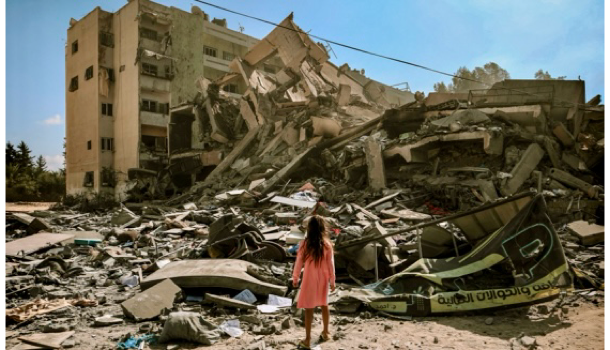
“Apartheid was about keeping the best parts of the country for the whites and sending the blacks to the least habitable, least desirable parts of the country. And one sees that all the time here in the occupied territories, particularly with the wall, now, which is really a land grab. One sees Palestinians dispossessed of their homes by bulldozers. One can draw certain parallels with respect to South Africa that, during the heyday of apartheid, population relocation did result in destruction of property, but not on the same scale as the devastation in Gaza in particular, or in the West Bank.”
An extract from an article by Chris McGreal, 07.02.2006
The full article: theguardian.com
Israeli Tank Kills A Teenage Girl And Wounds Three Other People.
A Palestinian teenage girl was killed by a shell that exploded in the Gaza Strip and which hospital workers and Hamas officials said was fired by an Israeli tank.
The Palestinian hospital workers said three other people were wounded when the shell struck near a house in al-Bureij refugee camp in the central Gaza Strip, killing the girl.
( Relief Web, 02.07.2009 ) .. reliefweb.int
Related Posts


Comments (0)