Zionism Is A Tool Of British Imperialism Which Needs Palestine For Its Own Purposes. This…
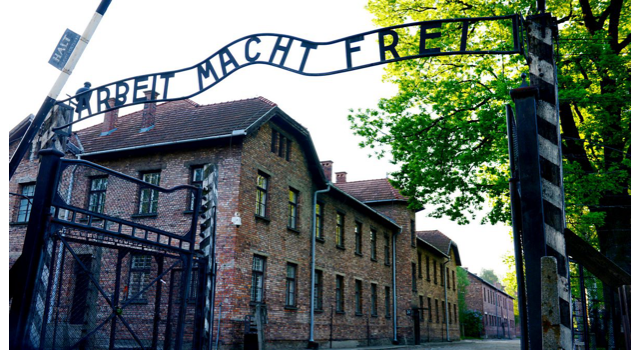
Germany’s Holocaust Reparations:
Who Received Compensation, Who Didn’t, And Why?
An examination of the billions paid by Germany after the Second World War, the different groups of victims, and the inequalities that emerged in the compensation process.
When we think about the atrocities committed by Nazi Germany during the Second World War, the Holocaust and the deaths of many Jewish people rightly occupy an important place in history.
However, Jewish people were not the only victims of Nazi persecution.
Millions of Soviet prisoners of war, Roma and Sinti, Polish civilians and other forced labourers also suffered imprisonment, starvation, torture, medical experimentation and mass murder.
Following Germany’s defeat in 1945, the question of compensation eventually became an enormous international issue.
Germany entered into agreements with Israel, Jewish organisations and numerous European countries.
It established compensation schemes, pension arrangements and funds intended to help survivors rebuild their lives.
- But were all victims treated equally?
- How much money was actually paid?
- And what happened to the families of those who died and never lived to receive compensation?
The answers reveal a complicated history, with some striking differences between the various groups.
How Much Has Germany Paid?
The Conference on Jewish Material Claims Against Germany (usually called the Claims Conference) reports that Germany has paid approximately $95billion in indemnification to individuals for suffering and losses resulting from Nazi persecution since 1952.
A U.S. State Department report recorded an amount of approximately $86.8billion in German restitution and compensation payments between 1945 and 2018.
According to the German Federal Ministry of Finance, the German government and regional governments had paid approximately €87billion in compensation for Nazi persecution by the end of 2025. This includes compensation for individuals, restitution of stolen property, hardship payments, international agreements and other arrangements.
These figures cover many different categories of victims.
They also do not represent every contribution made by German businesses, private organisations or other sources.
Jewish Victims.
The deaths of approximately six million European Jews was the central genocide carried out by Nazi Germany and its collaborators.
Following the war, Jewish survivors faced enormous difficulties.
Many had lost their entire families, homes, possessions and livelihoods.
In 1951, representatives of 23 major international Jewish organisations established the Conference on Jewish Material Claims Against Germany, generally known as the Claims Conference.
In 1952, West Germany entered into the Luxembourg Agreement.
Under the agreement, Germany undertook to provide:
3 billion Deutsche Marks to Israel, principally in goods and services.
450 million Deutsche Marks to the Claims Conference for Jewish refugees outside Israel.
Further compensation arrangements followed over subsequent decades.
The Claims Conference reports that approximately $95 billion in individual indemnification has been paid as a result of its negotiations with Germany since 1952.
Compensation has included monthly pensions, one-off payments and assistance with medical care, accommodation, food and other necessities.
In 2025, approximately $530million was distributed in direct compensation to survivors, with a further $960million allocated to welfare services.
Germany continues to negotiate and fund compensation arrangements for surviving Holocaust victims.
However, it is important to distinguish between survivors and their descendants.
Being the child or grandchild of a Holocaust victim does not automatically qualify someone for a monthly compensation pension.
Certain surviving spouses and heirs may qualify under specific arrangements.
Roma and Sinti Victims.
The persecution of Europe’s Roma and Sinti communities is sometimes overlooked when discussing the Holocaust.
The Nazis considered Roma people racially inferior and subjected them to imprisonment, deportation, forced sterilisation, forced labour and mass murder.
Their persecution was initially not properly recognised by German compensation authorities. Thousands of applications were rejected before the position began changing in the 1980s.
This meant that many survivors lost decades during which they might otherwise have received compensation.
Historians estimate that approximately 500,000 Roma and Sinti were murdered by Nazi Germany and its allies, although some historians consider the true figure of deaths could be much higher.
One particularly horrifying example was Auschwitz-Birkenau.
Approximately 23,000 Roma were imprisoned there, and around 21,000 died.
Yet the treatment of Roma survivors after the war was particularly troubling.
In 1956, the West German Federal Court of Justice upheld a restrictive interpretation of persecution, treating some measures against Roma as supposed crime-prevention measures rather than racial persecution.
Consequently, many survivors were refused compensation.
Following years of campaigning, particularly by the Central Council of German Sinti and Roma, the position gradually changed.
Thousands of previously rejected applications were reconsidered, and some survivors eventually received compensation for imprisonment, physical injuries and lost employment opportunities.
A German government statistical record identified 2,389 applications by Sinti and Roma under one particular hardship arrangement.
Of these, 1,219 had been approved by December 2008, with approximately €14.5million paid.
This was only one compensation arrangement, not a complete account of all payments to Roma survivors.
Unlike Jewish compensation, there was no comparable comprehensive international programme dedicated to Roma victims.
Soviet Prisoners Of War.
Perhaps one of the most striking differences in Germany’s compensation arrangements concerns Soviet prisoners of war.
During the German invasion of the Soviet Union in June 1941, millions of Soviet servicemen were captured.
The United States Holocaust Memorial Museum estimates that:
Approximately 5.7 million Soviet soldiers were captured.
Approximately 3.3 – 3.5 million died in German captivity.
Many died from deliberate starvation, exposure, disease and inadequate medical care.
Others were shot or subjected to forced labour.
The German treatment of Soviet prisoners was particularly brutal and was part of the wider Nazi racial war against the Soviet Union.
For decades after the war, former Soviet prisoners of war were largely excluded from the principal German compensation arrangements.
It was not until 2015, seventy years after the end of the war, that Germany introduced a special recognition payment.
Eligible surviving former Soviet prisoners could apply for a one-off payment of €2,500.
A historical account of this compensation programme estimated that only approximately 4,000 Soviet POWs were still alive when the 2015 decision was made.
There was, however, an important restriction.
The payment was not inheritable.
The families of Soviet prisoners who had died in German captivity could not claim the €2,500 on their behalf.
In other words, the millions who had died were not individually compensated through this scheme, nor were their families.
Other Forced Labourers.
Millions of people from occupied European countries were transported to Germany and forced to work in factories, mines, agriculture and other industries.
They included Polish and Soviet civilians, Roma and Sinti, and people from numerous other occupied countries.
Many endured appalling conditions, starvation, physical abuse and disease.
In 2000, Germany established the Foundation Remembrance, Responsibility and Future, known by its German abbreviation, EVZ.
The foundation was funded jointly by the German government and German industry.
The 2001–2007 programme also included Roma victims.
A German parliamentary report published in 2021 gives us some additional information.
Of approximately 43,000 Roma survivors identified by the International Organisation for Migration (IOM) in 17 countries, only approximately 19,000 registered as applicants, and approximately 12,000 ultimately received compensation.
Between 2001 and 2007, approximately €4.4billion was distributed to more than 1.66 million former forced labourers and their legal successors in 98 countries.
Individual payments generally ranged from approximately €2,500 to €7,669, depending on the category of persecution and forced labour.
Unlike the Soviet POW recognition scheme, the EVZ programme included certain legal successors of deceased victims.
However, it was a time-limited programme, and applications are now closed.
There was also an important exclusion: ordinary prisoners of war were generally not eligible under the main forced-labour programme.
This is one reason Soviet POWs had to wait for a separate recognition arrangement.
How Do The Four Groups Compare?
The following figures illustrate the different experiences and compensation arrangements.
| Group | Estimated deaths | Main compensation arrangements |
| Jewish victims | 6 million | Multiple compensation programmes, pensions, restitution and welfare |
| Roma and Sinti | 500,000+ | Individual compensation, hardship arrangements and some pensions |
| Soviet prisoners of war | 3.3 million – 3.5 million | €2,500 one-off recognition payment for eligible survivors |
| Other forced labourers | Deaths difficult to separate from overlapping categories | €4.4 billion EVZ programme |
These figures must be treated carefully.
Jewish and Roma victims were also among the concentration camp prisoners and forced labourers, so the categories overlap.
There is also no reliable total for the number of Jewish or Roma people who were imprisoned and subsequently survived.
Also, many may have died without ever being formally registered as prisoners.
What About Payments To Other Countries?
Germany did not simply compensate individuals.
It also entered into agreements with foreign governments.
The 1952 agreement with Israel is perhaps the best-known example.
Germany undertook to provide Israel with 3 billion Deutsche Marks, principally through goods and services, to assist with the resettlement and rehabilitation of Jewish refugees.
The Claims Conference received a further 450 million Deutsche Marks.
Other agreements followed.
Poland received substantial payments, including agreements involving 1.3 billion Deutsche Marks in 1975 and 500 million in 1991.
In 1993, Germany also agreed to provide 400 million Deutsche Marks to Russia, 400 million to Ukraine and 200 million to Belarus.
These agreements were intended to address the consequences of Nazi persecution and wartime losses.
However, there is an important distinction between money paid to governments and money paid directly to victims.
Some government payments supported rehabilitation, social programmes and other national purposes.
They should not automatically be described as personal compensation received by individual survivors.
Were All Victims Treated Equally?
The historical evidence shows that compensation arrangements developed very differently.
Jewish survivors benefited from a succession of negotiated programmes beginning in the early 1950s, with financial support continuing today.
Roma and Sinti survivors encountered serious discrimination.
Many were initially denied recognition as victims of racial persecution and had to fight for compensation for decades.
After 1982, more than 3,500 previously rejected individual compensation cases were reconsidered.
Some survivors subsequently received compensation for concentration camp imprisonment, lost education and occupational opportunities, and physical injuries.
In the late 1990s, approximately 2,900 Sinti and Roma Holocaust survivors received one-off payments through a Swiss banking fund for financial and property losses.
Soviet prisoners of war faced a particularly long wait for recognition.
Their special payment was not introduced until 2015, and it excluded the families of those who had died.
Other forced labourers eventually received a substantial compensation programme, but it was not established until 2000 and closed to new claims in 2007.
It is also worth remembering that millions of people who suffered under Nazi rule never received individual compensation.
Some died before the war ended; others did not meet the eligibility requirements or were unable to establish their claims.
Conclusion: Compensation, Recognition And Historical Justice.
Germany’s post-war compensation arrangements represent an enormous financial undertaking, extending across more than seven decades.
The official German public-sector total reached approximately €87billion by the end of 2025.
But the figures tell only part of the story.
For some survivors, compensation meant a monthly pension and continuing assistance.
For others, it amounted to a single payment made many decades after the events.
For the families of millions of murdered Soviet prisoners of war, the special recognition payment introduced in 2015 offered no financial compensation at all.
And for many Roma and Sinti survivors, recognition came only after years of discrimination and rejected claims.
It is therefore important not to look solely at the total amount Germany has paid.
We should also ask who qualified, who actually received the money, how long they had to wait, and what happened to the families of those who never survived.
Financial compensation cannot restore murdered relatives, rebuild destroyed families or undo the suffering of millions.
But the way different victims were recognised and treated after the war remains an important part of European history.
Perhaps the most important lesson is that remembering the victims should mean remembering all of them, not just those whose suffering became the most widely recognised.
Sources And Further Reading.
The following organisations provide useful historical records, official financial figures and further information:
- German Federal Ministry of Finance – Public-sector compensation payments and the history of compensation for Nazi persecution.
- Conference on Jewish Material Claims Against Germany – Jewish survivor compensation and welfare programmes.
- United States Holocaust Memorial Museum – Historical research on the Holocaust, Soviet prisoners of war and the Roma genocide.
- Foundation Remembrance, Responsibility and Future (EVZ) – Compensation for former forced labourers.
- Central Council of German Sinti and Roma – The history of Roma persecution and the struggle for post-war recognition.
Related Posts


Comments (0)