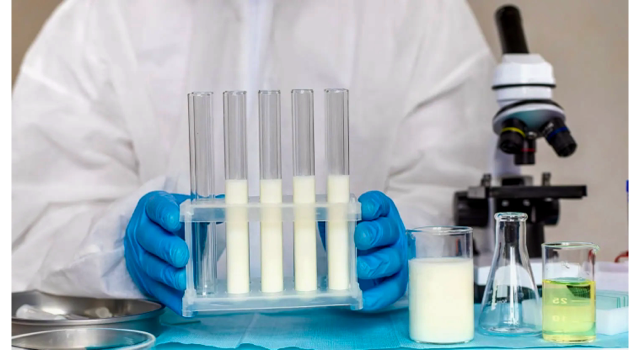
An Israeli Company Is Developing Milk Using Animal Cells. Wilk Technologies, formerly BioMilk, is an…

By Reducing The Consumption Of Animal Products We Boost Our Body’s Natural Cancer Defences.
In 2006, the effects of a healthy diet (plant-based) and lifestyle (walking every day) on tumour cell growth and apoptosis in vitro were tested.
Researchers found that within only 2 weeks of healthy living, participants blood samples were able to suppress cancer growth and kill 20%-30% more malignant cells than blood samples taken prior to the diet/lifestyle change.
It was concluded that the cancer suppression effect could be attributed to decreased levels of insulin-like growth factor 1 (IGF-1) due to reduced intake of animal protein.
IGF-1 is a hormone crucial for cell growth, and the more IGF-1 presents in the blood stream, the higher ones risk for cancer development.
Therefore, it is hypothesised that by reducing animal intake, we reduce IGF-1 and boost our body’s natural cancer defences.
In 2002, Ngo and colleagues found that after 11 days of reducing animal protein consumption, levels of circulating IGF-1 dropped by 20%, whereas levels of the cancer protective IGF-1 binding protein increased by 50%.
In terms of how much the intake of animal proteins must be reduced in order to obtain these protective effects, it is only those following a fully plant-based (vegan) diet that experience cancer protection due to decreased growth hormone and increased binding protein levels.
Vegetarians who consume eggs and dairy do not have the same protective effect, because all animal proteins stimulate the production of IGF-1, regardless of if the source is from the muscle, eggs, or dairy.
Another substance besides IGF-1 that is found in animal products and contributes to cancer risk is heterocyclic amines (HCAs).
Since an original paper in 1939, it has been found that cancer producing substances are present in animal products cooked in various forms at high temperatures (roasting, pan-frying, grilling, baking).
HCAs are described by the National Cancer Institute as “chemicals found when muscle in meat, including beef, pork, fish, and poultry, is cooked using high-temperature methods”.
HCAs are formed when these high temperatures promote chemical reactions between components of muscle tissue, compounds that are lacking in plants and thus cooked veggie burgers/products do not contain measurable amounts of HCAs.
The longer the meat is cooked, the more HCAs produced, and results show that well-done meat is associated with increased risk of breast, colon, esophagus, pancreas, prostate and stomach cancer.
This however, does not mean that less cooking time doesn’t produce HCAs, and even baking chicken for 15 minutes at 350 degrees leads to the production of measurable amounts that lead to DNA damage and thus an increased risk for cancer development.
A number of studies, including the Long Island Breast Cancer Study Project and the Iowa Women’s Health Study have demonstrated significant correlation between women eating more cooked meats and higher odds of developing breast cancer.
The Long Island study saw a 47% increased odds in women who ate more grilled, barbecue, or smoked meat across their lifetime, and the Iowa study saw a 5-fold increased odds of cancer occurrence in women who ate their meat “well-done”.
Studies have also shown a link between the amount of DNA damage in the breast tissue and fried meat consumption.
( Elisa Karhu, 07.11.2018 ) .. oaepublish.com
Plastic Traces In Animal Feed Could Pose A Risk To Human Health.
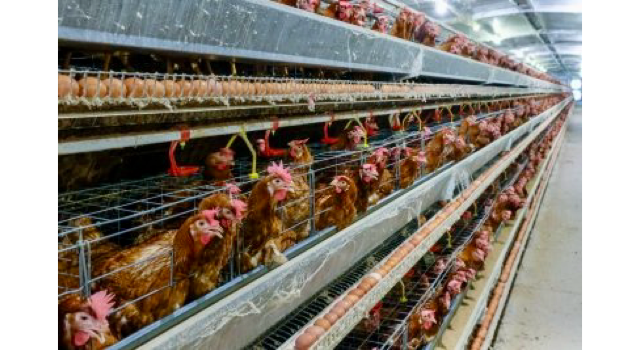
More than 650,000 tonnes of unused food, from loaves of bread to Mars bars, are saved from landfill each year in the UK by being turned into animal feed.
The system that strips off the plastic wrappings can’t capture it all, and so in the UK a limit of 0.15% of plastic is allowed by the Food Standards Agency.
The official EU level for plastic permitted in animal feed is zero although in reality many other countries operate within the same 0.15% limit.
Plastic traces in animal feed could pose a risk to human health and urgently need to be the subject of more research, experts told the Guardian newspaper.
Their comments came after British farmer Andrew Rock contacted the Guardian, having noticed plastic shreds in his animal feed.
Mr Rock was told by the suppliers that this was a legal part of the recycling process that turns waste food, still packaged, into animal feed.
( Harriet Grant, 15.12.2018 ) .. theguardian.com
Eating Meat Is Killing People.
A “meat tax” could prevent almost 6,000 deaths per year in the UK, according to researchers.
Scientists at the University of Oxford say governments should consider imposing price hikes on red meat, such as beef, lamb and pork, to reduce consumption.
They say it would save lives and more than £700million in UK healthcare costs, according to new research.
Various research has linked eating red meat to an increased risk of heart disease, stroke and diabetes.
Researchers at the University of Oxford said meat eaters were also increasing the burden on the health service and the economy, due to a loss of workforce from ill health.
There is also a growing awareness of the environmental impact of eating red meat, with high levels of land and water use and carbon emissions associated with its production.
( BBC News, 07.11.2018 )
Next To Skin Cancer, The Most Common Cancer Among American Women Is Breast Cancer.
Each year an estimated 250,000 are diagnosed (in addition to 2,500 cases in men), and 40,000 women as well as 460 men die from it.
Typically, imaging and early detection is emphasised in order to improve survival.
However, early detection and screening does not prevent breast cancer, it simply picks up disease that already exists.
Furthermore, modern imaging isn’t good enough to detect cancer’s earliest stages, thus what has come to be described by the medical community as “early detection”, is unfortunately actually “late detection”.
For example, a breast cancer tumour must be the size of about 2 billion cells (30 doublings) in order to get picked up by a mammogram.
The main factor that determines doubling time, and thus the timing of when someone gets diagnosed with cancer, can range from 25 days to over a thousand days.
This means that someone could be diagnosed anywhere between 2 and 100 years, and a primary determination as to where an individual falls on that timeline, may depend on what they eat.
Based on autopsy studies, as many as 39% of women in their 40’s already have developed breast cancers that may simply be too small to detect by mammograms.
Breast cancers may even begin developing in utero due to a mother’s diet.
Thus, waiting until diagnosis to start eating and living healthier, might be too late.
Therefore, perhaps we should be living as if we already have the beginnings of disease in our bodies, because a diet and lifestyle of prevention may also be one of treatment for the potential occult diseases that we cannot yet see.
( Elisa Karhu, 07.11.2018 ) .. oaepublish.com
Our Diet Remains The Number-One Cause Of Premature Death.
In the United States and many other industrialised countries, the main causes of death are preventable. In particular, our diet remains the number-one cause of premature death and the number-one cause of disability.
Populations consuming diets of mostly plant-based foods have been characterised by a marked reduction in mortality and age-adjusted incidence of many cancers common in Western society. These cancers include breast, prostate, colon, pancreas, ovary, and uterine endometrium cancers.
However, this phenomenon is becoming less prominent as the Westernised diet and lifestyle spread throughout the world.
Reports by the International Agency for Research on Cancer, the cancer agency of the World Health Organization implicate red and processed meats as important carcinogens.
In contrast, other nutritional aspects such as high intake of fiber, fruits and vegetables have a protective effect on cancer.
While the importance of plant-based foods such as fruits, vegetables, nuts, seeds, and legumes as sources of nutrients is generally accepted, utilisation of diet for prevention and management of disease is still uncommon.
This is despite the fact that multiple observational and experimental research studies have demonstrated a significant protective effect of plant-based diets against the incidence of cancer as well as many other disease conditions including the 15 leading causes of death in the western world.
A recent comprehensive meta-analysis reported a significant protective effect of a vegetarian diet vs. the incidence from total cancer (-8%) while a vegan diet conferred a significant reduced risk (-15%) of incidence from total cancer.
( Elisa Karhu, 07.11.2018 ) .. oaepublish.com
Related Posts

Comments (0)